
Step-by-step Guide to Growing Tomatoes in Ireland
Updated January 2026
A practical guide from Fat Tomato to grow truly delicious tomatoes in Irish conditions

Anthony holding a Tomato Pineapple Ananas
There’s nothing quite like the taste of a homegrown tomato - warm from the vine, fragrant, and full of flavour. At Fat Tomato in North Wexford, we grow over 100 heritage and open-pollinated tomato varieties each season, chosen for taste, curiosity and resilience, not uniformity or shelf life.
Most of our tomatoes are grown in our polytunnel, with a small number outdoors in raised beds and pots when conditions allow. We grow exclusively from organic, chemical-free, open-pollinated seeds - varieties that are easier to grow, better for the soil, and (most importantly) capable of producing tomatoes with real depth of flavour.
Each year, we hand-select a small number of exceptional plants to save seed from, and we offer those varieties through our online shop - so you can grow the same tomatoes we grow here.
Ready to sow? Browse our full collection of heritage, open-pollinated tomato seeds here - all grown, trialled and seed-saved in Irish conditions.
1. Choose the Right Tomato Variety
Start by thinking about:
the space you have - polytunnel, greenhouse, raised bed, or pots
your local microclimate
how you like to eat tomatoes
Tomatoes come in many forms - cherry, plum, salad, globe, beefsteak, and oxheart - each suited to different uses and growing conditions.
Growing outdoors in Ireland: Choose varieties that tolerate cooler Irish temperatures, occasional damp, and will ripen without the extra warmth of a polytunnel or greenhouse.
Growing in pots: If space is limited, go for compact, fast-ripening cherry tomatoes. We particularly love Latah, Maskotka, Clementine, Mini Marzano, and Yellow Submarine for their speed, reliability, and flavour.
These are all varieties we grow ourselves at Fat Tomato and offer through our online shop - chosen specifically for Irish weather, flavour, and reliability.
Seed choice matters: Always choose organic, chemical-free, open-pollinated seeds from trusted suppliers. At Fat Tomato, we do not grow GM or F1 varieties as they’re mostly bred for uniformity rather than flavour.
Irish seed savers and suppliers worth supporting include Brown Envelope Seeds, Irish Seed Savers, and of course, our own Fat Tomato seed collection - grown in North Wexford, hand-selected for flavour, and never treated or chemically coated.
Browse our chemical-free tomato seeds on the Online Shop here →
2. Prepare for Sowing Tomatoes indoors
Timing:
Start seeds 6 to 8 weeks before your last expected frost.
In most of Ireland, this means sowing from February to March. Some people start sowing in January, but you need to make sure you can maintain heat and light, as seedlings might not survive.
At Fat Tomato, we sow in small batches from February to April on a heated bench in our polytunnel, giving us a steady supply of tomatoes right through to November - and often December in good years. These are the same seeds we sell through our online shop — so you’re growing exactly what we grow here in our own polytunnels.
You can sow tomatoes up until May if you choose quicker or later-season varieties.
Supplies needed:
Organic, chemical-free tomato seeds
Seed or modular trays or small pots
Seed labels
Organic peat-free seed compost
Organic peat-free potting compost
Vermiculite
Spray bottle or fine watering can
Heat mat or heated bench (optional but ideal)
Grow lights (if natural light is limited)
Clear plastic cover or cling film (optional, for humidity)
3. Prepare the Seed compost
Soil mix: Mix a handful of vermiculite into your organic peat-free seed compost. You should be able to see small flecks of it in the mix. Vermiculite is used to keep the soil moist, improve soil aeration, and support germination.
Seed trays: Fill your seed trays.
Moisten the mix: Lightly dampen the compost before sowing. It should be moist, not soggy.
4. sow the Seeds
Sowing depth: Sow tomato seeds approximately 0.5cm deep.
Spacing: In trays, space seeds 2cm apart. In small pots: sow 2 to 3 seeds per pot.
Cover: Lightly cover the seeds with a thin layer of the soil mix above. You can also just do a light sprinkling of vermiculite.
Labels: Always label each variety and include the sowing date on the back.
5. Create Ideal Growing Conditions
Temperature: Seeds germinate best at 20°C to 27°C. If available, use a heat mat or heated bench. A sunny windowsill will also work - check regularly to prevent the compost from drying out.
Humidity: To retain moisture, cover the trays with a plastic dome or cling film. Remove the cover once the seeds have germinated.
Light: Seedlings need 12-16 hours of light daily after germination. If indoors without much natural light, use grow lights. Keep the lights a few centimetres above the seedlings to prevent stretching. The term you will hear gardeners saying is legginess, which means the plant is looking for light, growing weak stems and sparse foliage.
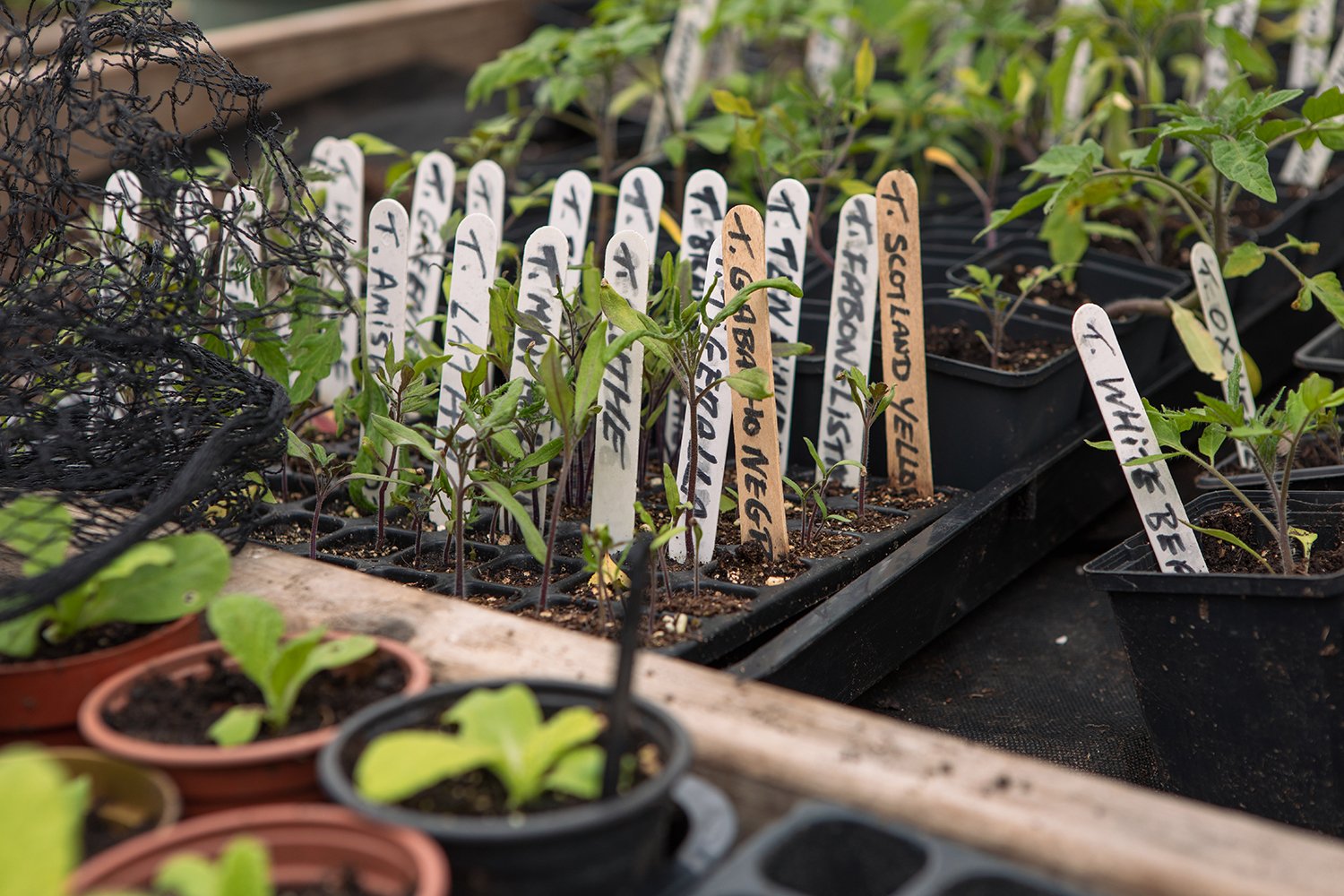
Tomato seedlings in tray with some potted up on the right
6. Watering and Care
Watering: Keep compost lightly moist. Mist early on, then water at the base once seedlings are established. Avoid wetting leaves as tomato plants dislike it.
7. Transplanting into Larger Pots
When to transplant: Once seedlings have 2 to 3 sets of true leaves and strong root development, they’re ready to move to larger pots.
Potting up: Transplant each seedling into an individual small-to-medium-sized pot. Handle with care to avoid damaging the roots. If your seedlings are leggy, you can bury part of the stem in the compost - tomatoes grow roots from buried stems, strengthening the plant.
We don’t usually return plants to the heated bench at this stage unless the weather turns unusually cold.
8. Harden Off the Seedlings
Acclimatisation: If sowing tomatoes outdoors, begin hardening off around 7 to 10 days before planting out. Gradually expose seedlings to outdoor conditions by placing them in a sheltered, shaded area for a few hours each day. Increase their time and light exposure gradually to help them adjust without stress.
9. Prepare the Garden BedS or Containers
Site selection: Choose a sunny location - tomatoes need 6 to 8 hours of direct sunlight daily. Good drainage is essential.
Soil preparation: For in-ground planting, enrich the soil with organic compost or well-rotted manure. For containers, ensure they’re deep (at least 50cm) and offer proper drainage. Tomatoes have deep root systems and thrive in larger pots.
Spacing:
Determinate (bushy) varieties: space 50cm apart
Indeterminate (vining) varieties: space 60cm apart
In Ireland, planting out usually happens from late May onwards, once frost risk has passed.
10. PlantING
Plant deep: Bury the seedlings deeper than they were in their pots, up to the first set of leaves. This encourages additional root development along the buried stem.
Label: Label each plant clearly with its variety. We use brown tape, attaching it to the string/support structure.
Water well: After planting, water thoroughly to settle the soil around the roots.
11. Support
Staking or stringing: Use stakes, canes, or string supports to keep plants upright and off the ground - this improves airflow, reduces disease, and makes harvesting easier.
At Fat Tomato, we string tomatoes from roof wires in the polytunnel, burying the twine under the plant at planting time.
Tie gently: As plants grow, loosely tie stems to supports using soft garden twine or fabric strips to avoid damage.
12. Ongoing Care, FEEDING and pruning
Watering: Water consistently - deep and less frequent watering encourages strong roots. Avoid wetting the leaves to prevent fungal problems. We water every second day until fruiting begins, then switch to every fourth day to concentrate flavour - watery tomatoes are no good.
Mulching: Apply a layer of organic mulch (straw, grass clippings, sheep wool, or shredded leaves) to help retain moisture and suppress weeds. We love sheep wool as it keeps the soil warm and moist and naturally breaks down, feeding the soil with nutrients.
Feeding: Feed fortnightly if needed, using organic fertilisers. We use a mix of homemade Comfrey tea and organic seaweed feeds.
Pruning: For indeterminate (vining) varieties, remove side shoots (“suckers”) from where branches meet the main stem to encourage airflow and direct energy into fruit production. Once plants reach the desired height, pinch off the growing tip to stop vertical growth and boost fruiting. Add pruned leaves and stems to your compost heap - despite common myths, healthy tomato leaves can be composted without issue.

Tomatoes growing in our polytunnel with Nasturtiums and French Marigolds
13. Pest and Disease
Inspect regularly: Check your plants frequently for common pests such as aphids, whiteflies, and tomato hornworms. At Fat Tomato, we use companion planting to naturally deter pests - sowing basil, nasturtiums, and marigolds between the tomato plants.
Disease prevention: Maintain good airflow by properly pruning and spacing your plants. Avoid overhead watering to reduce the risk of fungal diseases, such as blight.
14. Harvesting
When to harvest: Tomatoes are ready to pick when they are fully coloured and slightly soft to the touch.
Remember, not all tomatoes ripen red - some turn yellow, orange, purple, or even black.Harvesting: Use garden scissors, pruners, or your fingertips to gently cut the fruit from the vine, leaving a small part of the stem attached. Not all tomatoes on a truss will ripen at the same time.
15. STORAGE AND PRESERVING
Storage: Store your tomatoes at room temperature, out of direct sunlight. Never refrigerate them - cold temperatures can ruin both flavour and texture.
Preserve: If you end up with a glut, freeze overripe tomatoes for winter use in soups, stews, or sauces. You can freeze whole tomatoes in tubs or compostable bags.
At Fat Tomato, we turn our harvest into everything from chutneys and jams to rich tomato sauces.
16. End of Season
Clear beds: Once all fruit has been picked, remove the spent vines and compost them.
Green tomatoes: It is normal to have a few green tomatoes left at the end of the season. To ripen them indoors, place them on a tray lined with brown paper, spaced out so they’re not touching. Add a ripe banana to speed up the process. Alternatively, turn them into a delicious green tomato chutney!
Grow With Us This Season
At Fat Tomato, we don’t just sell seeds - we grow them, trial them, cook with them, and save them. If you’d like to grow tomatoes chosen for flavour, resilience and Irish conditions, browse our full tomato seed collection here.
And when harvest arrives, you’ll find small-batch pantry jars, salts and seasonal gift boxes inspired by what we grow in the garden.
📍 Or visit our edible garden honesty farm shop in Ballymore, Camolin, Wexford
Running behind? Don’t worry. Seeds don’t always germinate, weather turns, life gets busy - it happens. From mid-May onwards, you’ll find healthy, hardened-off tomato plants available at our Edible Garden Honesty Farm Shop.